
The Uterus and the Baby
Uterus: Here are more details that will help elaborate on the differences between oxytocin and pitocin and how they work on me.
I am made of smooth muscle, like your heart – not the striated kind in your arms and legs that contract and then return to their original shape and size.
My wall has two layers of muscle fibers. The inner layer has horizontal fibers that wrap around the baby like gentle hoops. Before labor, these bands help keep the baby in. During labor, they relax, so the baby can move down. The outer layer has vertical fibers that run up and over me. These contract to pull the cervix upward and help push the baby downward, gathering at my top as labor progresses.
In the upper portion of my wall, the muscle fibers contract and relax but don’t return to their length. Instead, they become slightly shorter and thicker. As this happens, my lower segment stretches and becomes tinner and shorter. The baby’s pressure on the receptors in my cervix signals the pituitary to release more oxytocin – that’s what keeps this feedback loop going!
When pitocin is used on me, it doesn’t coordinate all the muscle layers to contract harmoniously and efficiently, like natural oxytocin does. Instead, it can cause extra and unequal activation of the outer muscle layer. Instead of the baby being gently squeezed, it is somewhat forcefully pounded against the pelvic floor. It can end up in a poor position. I’ve already talked about the increased chances of fetal distress due to prolonged contractions and less oxygen supply.
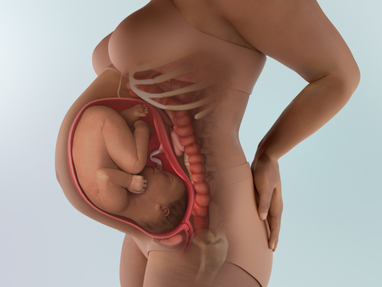
Hi, I’m the Baby, maybe even yours!
First of all, I sure wish I could be respected more. If people would be patient, my lungs would send chemical signals to shift my mom’s hormonal balance (for example, estrogen, prostaglandins, and relaxin would go up and progesterone would go down) and I myself could start the process to be born when I’m ready! I also want to wait until her body is ready – when her pelvic receptors are more responsive and her connective tissue has softened.
When you use pitocin on me, my home – the uterus – can contract so hard and frequently that I do not have time to recover. I really don’t want my mom to have a postpartum hemorrhage afterward due to my home – her uterus – being so tired out that it can’t clamp down on all the blood vessels after I’m born! My goodness, especially if she had a cesarean for my older brother or sister, it is really contraindicated to use pitocin or cytotec on her uterus. Pitocin was FDA-approved for medically-indicated inductions, but not for elective inductions.
If I’m in a funky position, pitocin can push me further into it. Once I reach the birth canal (my exit!) I may be lying slanted or with my head at an uneven angle, or a whole assortment of challenging ways. I didn’t get the chance to descend and rotate the way I naturally needed to. And lastly, if I am induced before 38 weeks (which might actually be even earlier than 38 weeks because of the 2-week margin of error with dating), I have a 50% higher chance of needing the NICU. I don’t want that!
The Process and Substances of Induction
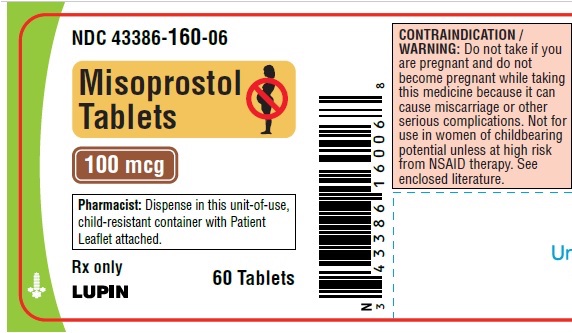
Hello there. My name is Cytotec, and I’m also known as Miso (which stands for Misoprostol). I think that pregnant women should read my label (also known as the package insert or prescribing information) because my manufacturer, J.D. Searle, wrote: “Cytotec (misoprostol) administration to women who are pregnant can cause abortion, premature birth, or birth defects. Uterine rupture has been reported when Cytotec was administered in pregnant women to induce labor or to induce abortion beyond the eighth week of pregnancy.”
Even though I have this printed warning, I am widely used off-label (which means outside the scope of the FDA-approved labeling) by obstetricians to induce labor. I’m also used with Mifepristone for medical abortions.
I was originally approved by the FDA for preventing gastric ulcers in patients taking nonsteroidal anti-inflammatory drugs (NSAIDs). But when obstetricians saw my ability to stimulate uterine contractions they started using me – that’s why the insert adds: “Cytotec should not be used in pregnant women to reduce the risk of NSAID-induced ulcers.”
I am given in a vaginal suppository or an oral form, and then usually given again 4 hours later, up to 4 or even 6 times. This covers 16-24 hours that the mom and partner are in the hospital room, possibly restricted to the bed. (Some people think an induction is one shot and then your baby comes that day). They may be pretty tired and weary at this point. Some moms will begin cramping or even contracting right away and some won’t feel too much, because the point is to be gentle over many hours when the cervix is not ripe.
Here is a more detailed history about me, and about off-label drugs. The Food and Drug Administration (FDA) is a regulatory agency created to establish and modify rules governing the use of foods, drugs, biologics, cosmetics, radiation-emitting electronics, and medical devices. After drugs or substances are approved for certain uses, a practice known as “off-label use” exists. Off-label use means medications are used in ways not originally approved, including different purposes, age groups, dosages, or methods of administration. Contrary to common belief, off-label drug use is legal in the United States and almost everywhere in the world. It is illegal to promote or market substances for off-label uses, but it is this practice is very common. Doctors are expected to use professional judgment and evidence. Unfortunately, pharmaceutical companies have little financial incentive to conduct the necessary clinical trials for drug approval, specifically for use in pregnant women.
The history of cytotec/misoprostol induction and off-label use began in 2000, when the manufacturer of cytotec, G.D. Searle, started receiving reports of multiple adverse effects when the drug was used to induce labor: uterine hyperstimulation, thick meconium, prolonged contractions, severe 3rd and 4th-degree lacerations, massive postpartum hemorrhage requiring hysterectomy, maternal death from amniotic fluid embolism, uterine rupture even in women without prior uterine scars, fetal distress, elevated rates of NICU admissions, and higher cesarean rates. Cytotec had originally been approved by the FDA in 1988 to prevent stomach ulcers in people taking NSAIDs (nonsteroidal anti-inflammatory drugs). By 2000, the drug had already gained widespread acceptance among many obstetricians and was being used off-label for labor induction, miscarriage management, and abortion, because of its effects on the uterus.
The Searle company actually issued a formal letter to birth professionals in August 2000 explicitly warning against using cytotec for labor induction. The letter cited risks including maternal or fetal death, uterine hyperstimulation, amniotic fluid embolism, severe vaginal bleeding, retained placenta, shock, fetal bradycardia, severe pelvic pain, uterine rupture, and newborns requiring NICU admission.
Nevertheless, two months after the warning, the American College of Obstetricians and Gynecologists (ACOG) responded with a letter to the FDA and a press release, claiming that adverse effects were due to improper usage, rather than the drug. They petitioned the FDA to make Searle retract its warning letter. The FDA did not agree to this request.
When obstetricians are questioned about their willingness to use cytotec for induction despite its labeling, they often respond with the claim, “We use drugs off-label all the time.” However, using cytotec for labor induction is not simply “off-label”—it is “on-label contraindicated.” The cytotec label explicitly states that the drug is contraindicated for use in pregnant women, meaning that it is known to pose serious risks in this context. This distinction represents a significant escalation in risk.
The only organization that recommends the use of cytotec for labor induction is the American College of Obstetricians and Gynecologists (ACOG).
These organizations do not recommend:
- U.S. Food and Drug Administration (FDA)
- Cochrane Database
- Searle, the manufacturer of cytotec
- Society of Obstetricians and Gynaecologists of Canada
- British Royal College of Obstetricians and Gynecologists
- All obstetric organizations in Scandinavia
- FIGO (International Federation of Gynecology and Obstetrics)
- World Health Organization
- Obstetric organizations and drug regulatory agencies in many other countries
Bishop Score
As the Cervix, I’d like to tell you about the Bishop Score. The Bishop Score uses five criteria to assess how favorably inclined I am toward an induction. As I’ve said, I like to be ripe and ready, rather than hard and stubbornly closed. The more you try to force me to soften and open when my Bishop Score is low, the longer the process will take, the harder it will be, and the more likely the mom is to end up with a cesarean section birth.

After the doses of cytotec/miso, the next step in the induction process will be applying the Foley balloon catheter. So many things are being done to me, and I wanted to do it myself! The mom, the baby, and my friends the hormones would all have helped.
The Foley balloon catheter is inserted through me (ouch!) and placed inside the uterus, then inflated with sterile saline or water. To mimic the pressure of a baby’s head on my receptors, the catheter is pulled down and taped to the mother’s thigh so the balloon inside will apply tension. When the balloon falls out (usually after 12-24 hours), the mom and I have dilated to about 3 cm. The balloon is pretty uncomfortable for me and the mom!
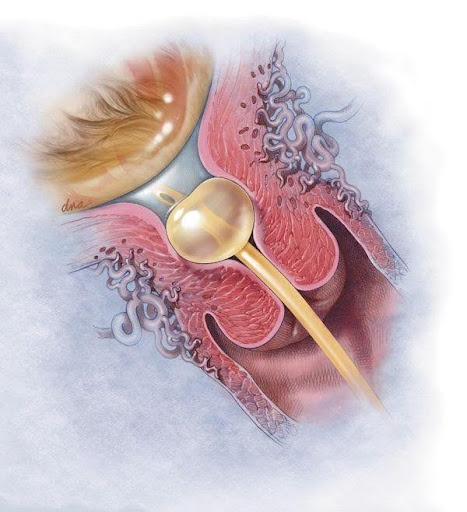
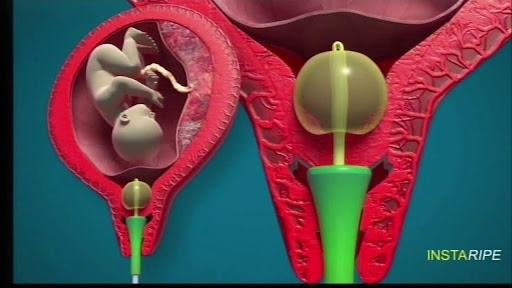
I feel sorry for the couple because they have likely now been in the hospital room for maybe up to 2 days and 2 nights. They are tired! And now the pitocin will be administered.
Stay Tuned for Part 3 . . . .